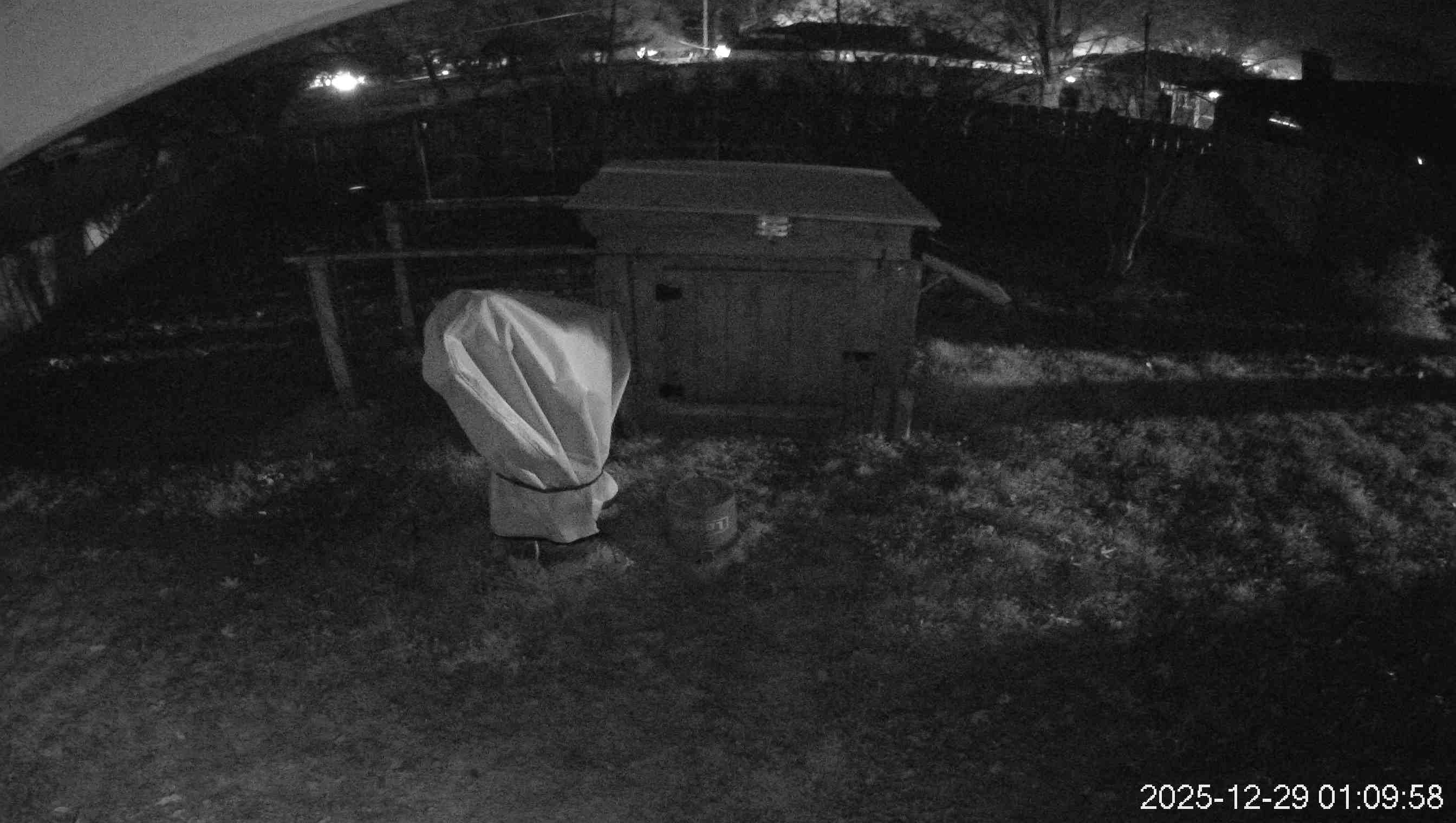
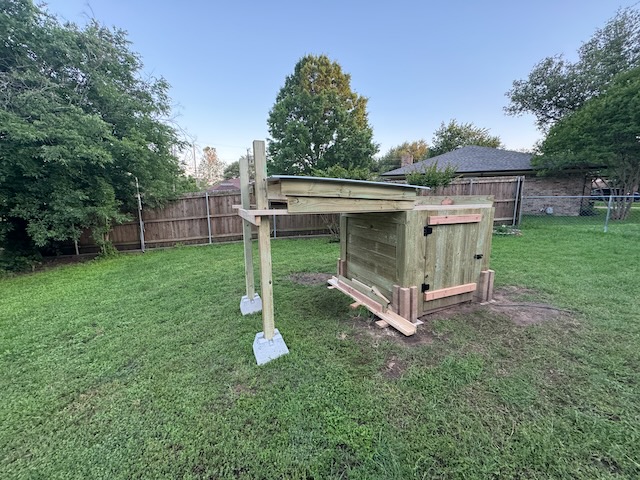
In May 2024, I decided it was time to build an observatory in the yard. Carrying the tripod, mount, and telescope out every night had become tiresome, and I wanted a setup that would make it easier to start imaging without the hassle of nightly setup and alignment. Rather than spending thousands on a pre-built observatory, I opted to design and construct my own. With that decision, the ScopeHut was born.
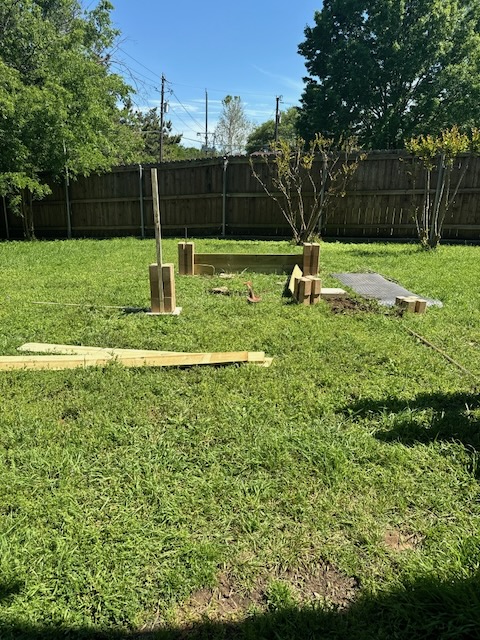

This project started as a simple shelter to protect the scope from the sun and rain during multi-night setups. I began by using landscape blocks and fence planks to outline the dimensions of the structure. Once I finalized the size, I leveled the area and started framing. The design was straightforward, utilizing basic 2×4 framing. I planned to build a 5-foot by 5-foot shed with a height of about 4 feet. With the basic design in mind, I got to work on construction.
The next challenge was designing the roll-off roof, which turned out to be surprisingly straightforward. The solution was to construct the roof as a separate, detached piece and install casters that would glide along a rail. This approach was both simple to implement and easy to maintain. For about two months, the ScopeHut remained in this basic configuration. With a roll-off roof observatory now set up in the backyard, astrophotography became significantly more convenient. Gone were the days of hauling heavy equipment outside and setting it up each night. Now, all I had to do was step outside and slide the roof back—effortless and efficient!

I admit, I can be quite lazy at heart. Don’t get me wrong, I work when I need to, but I prefer to do so efficiently and with minimal effort. Recently, even the thought of walking outside felt like too much work. Despite carrying the scope out each night, I found something new to complain about.
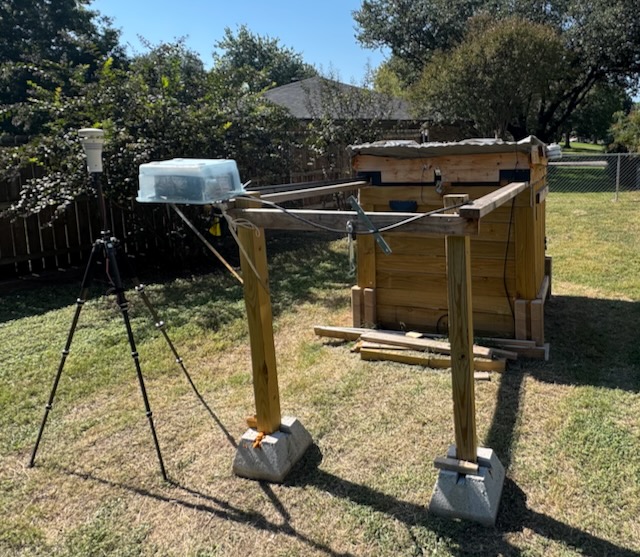
Then, I had an idea: automating the roof would make imaging even more convenient. That’s when the night skies truly opened up for me. With a garage door opener installed on the roof, I could open it from anywhere in the world. Life was good. This innovation changed everything. If there was a break in the clouds, I could open the roof and shoot for an hour or two. Previously, I only imaged on clear nights with no chance of rain. Now, I could start imaging and, if the weather turned, simply press a button to close everything up. Life was good.
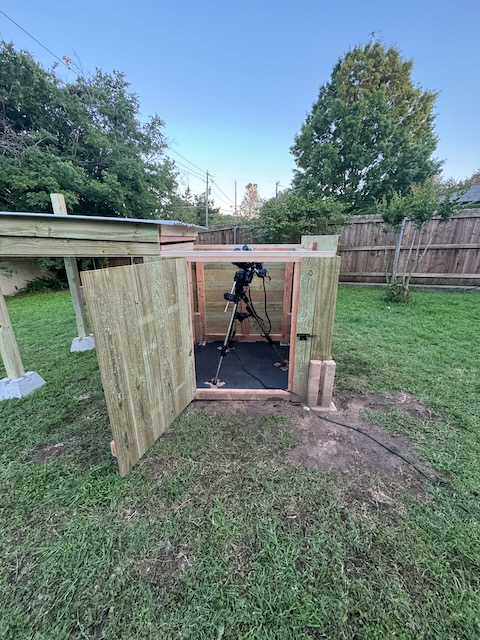
 ScopeHut Observatory
You must be logged in to post a comment.